- Car
- Mercedes-Benz
- Mercedes-Benz fintail (21 offers)
Mercedes-Benz Fintail classic cars for sale
The Mercedes-Benz Fintail series, produced from 1959 to 1968, stands out for its distinctive rear fins, innovative safety features, and a range that stretched from utilitarian diesels to luxury limousines and convertibles. Models like the W110, W111, and W112 catered for diverse tastes with robust engineering, ample comfort, and a style that captured both contemporary trends and practical needs. The Fintail is a favourite among classic car enthusiasts for its combination of German reliability, solid mechanics, and unique presence.
Search results
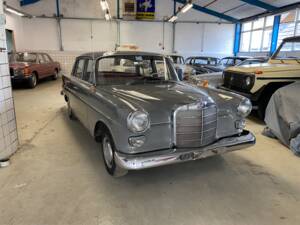
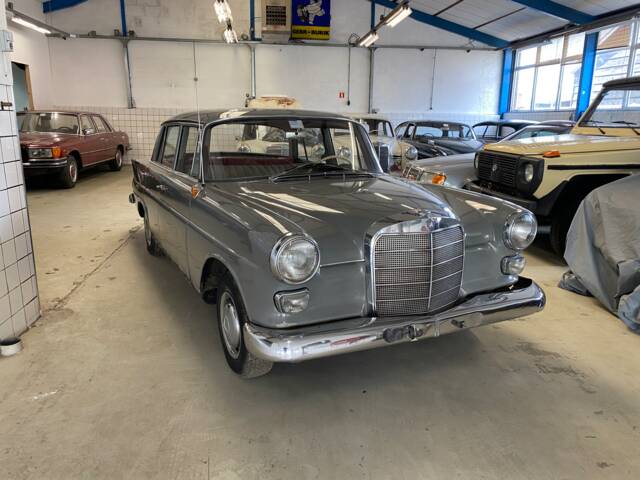

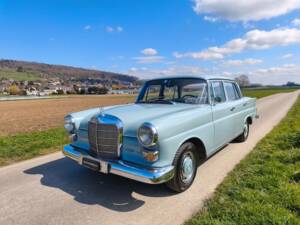
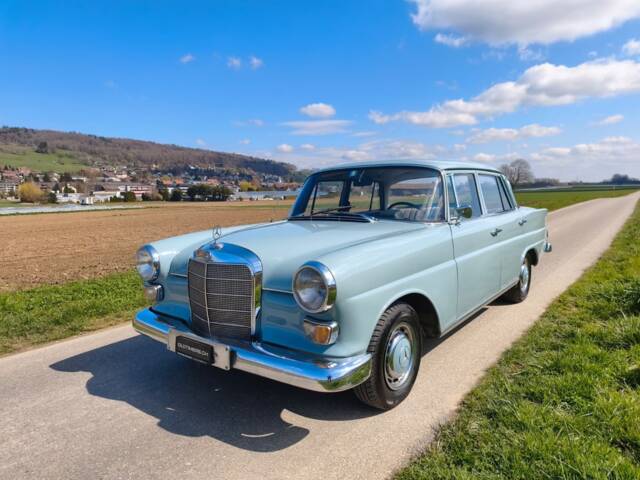
1967 | Mercedes-Benz 200
Charakterstarker Klassiker mit echter Ausstrahlung und authentischem Charme.

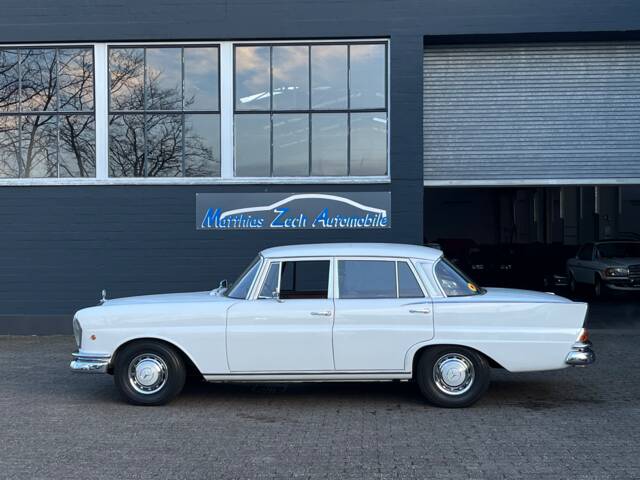
1965 | Mercedes-Benz 230 S
Leder* Geringe Gesamtlaufleistung * Nur 2 Halter bisher

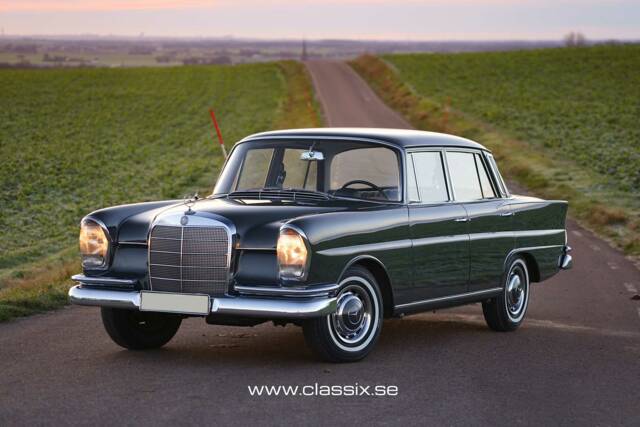
1965 | Mercedes-Benz 220 S b
Incredible condition! Original Servicebook!

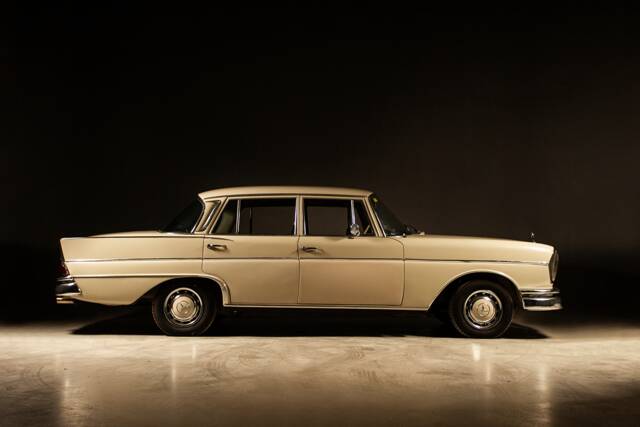
1965 | Mercedes-Benz 220 SE b
Mercedes-Benz 220 Sb (W111) de 1965
VAT is reclaimable

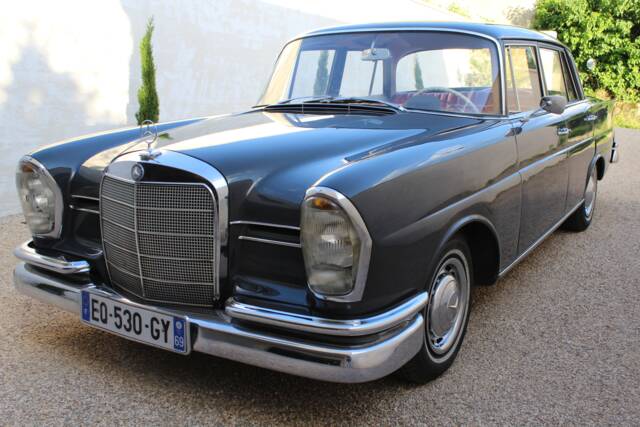
1961 | Mercedes-Benz 220 SE b
MERCEDES S 220 SE

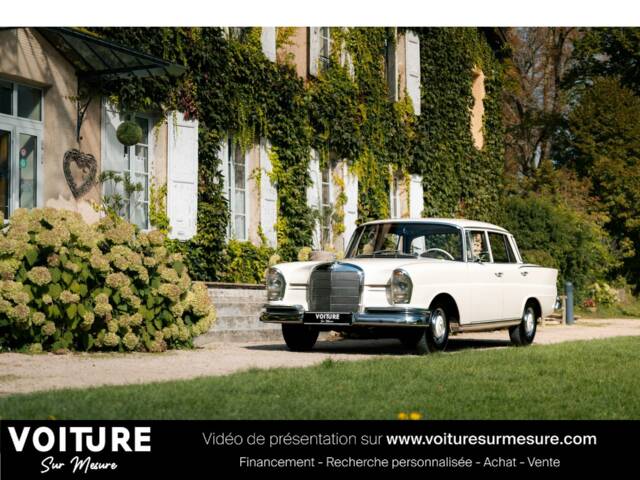
1967 | Mercedes-Benz 230 S
MERCEDES 230 W111 HECKFLOSSE S 2.3 120 CV - Historique complet - Suivi
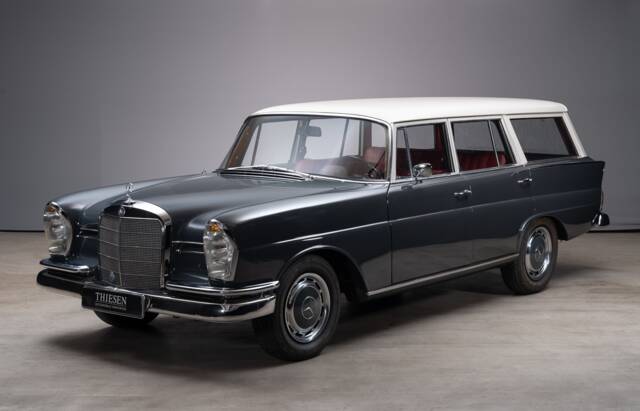
1967 | Mercedes-Benz 230 S Universal
230 S -IMA Universal-
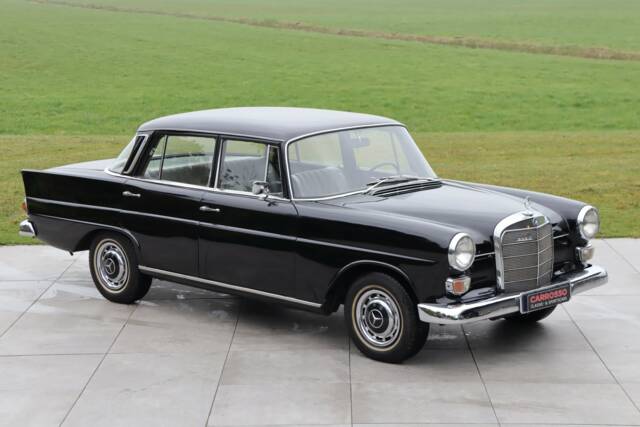
1967 | Mercedes-Benz 230 S
Mercedes-Benz 230 S W110 "Heckflosse" - Original Dutch Delivered
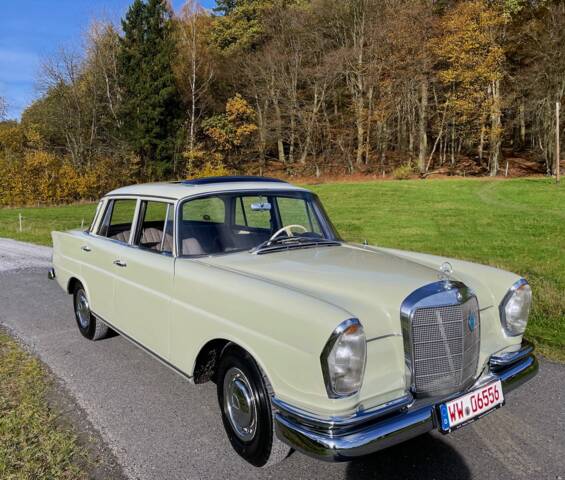
1964 | Mercedes-Benz 220 b
Original Heckflosse, 2 Besitz
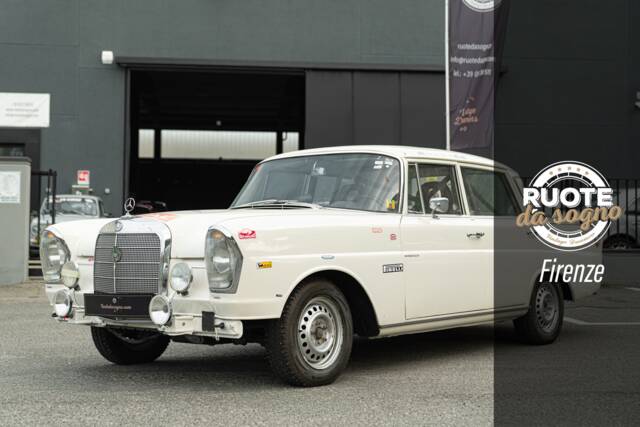
1967 | Mercedes-Benz 220 S b
Mercedes-Benz 220 S RALLY

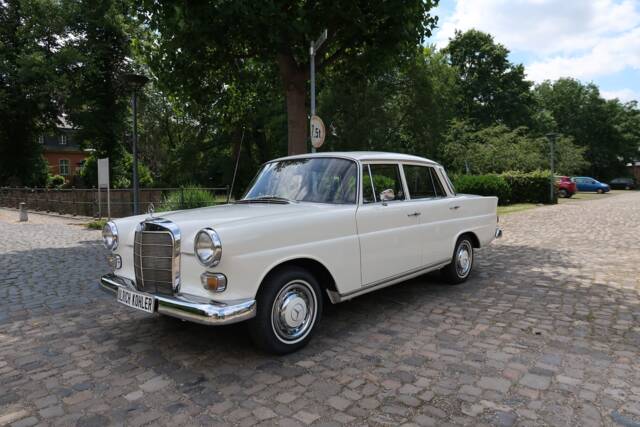
1966 | Mercedes-Benz 200 D
Einmalig,fast neu
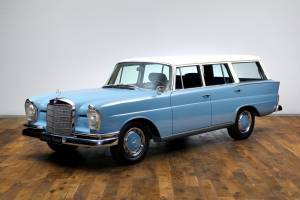
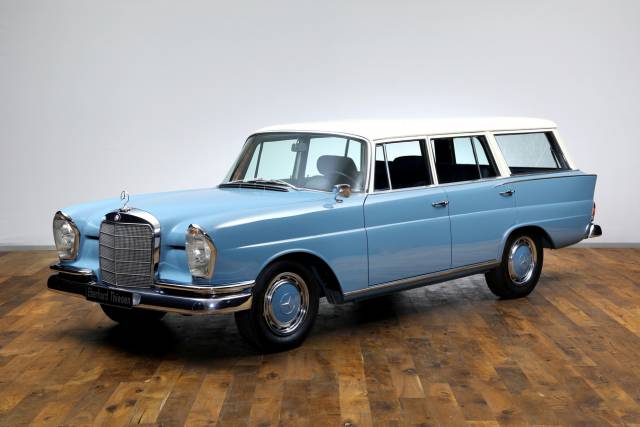
1968 | Mercedes-Benz 230 S Universal
Extremely rare, extensively restored

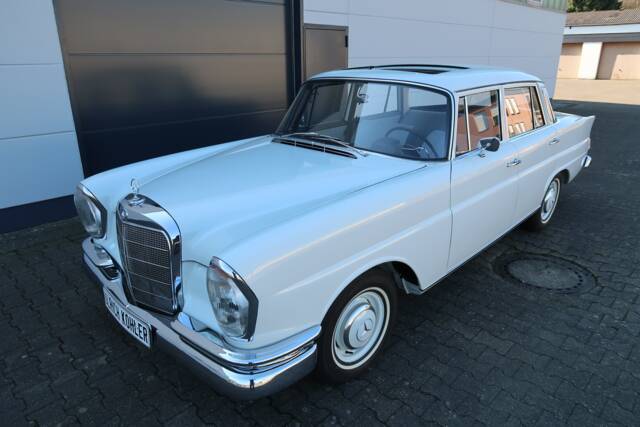
1965 | Mercedes-Benz 220 b
220 b Bj.7 /1965 SSD , Servolenkung
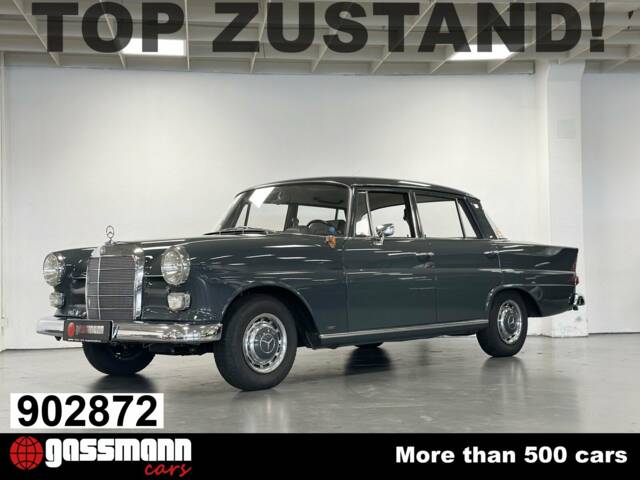
1964 | Mercedes-Benz 190 c
190 C Heckflosse Limousine - W110 mehrfach
Mercedes-Benz fintail Classic Cars: Prices & Market Values
The market value of Mercedes-Benz fintail classic cars is primarily determined by the specific manufacturer code and variant, as well as technical condition, originality and mileage. Additional factors include rarity, history and documentation. A well-maintained, largely original vehicle with low, verifiable mileage and complete history including appraisals and documentation typically achieves significantly higher prices than a comparable vehicle with deferred maintenance, many modifications or unclear provenance.
Mercedes-Benz fintail: Market Prices & Value Trends
Based on sales data from the Classic Trader marketplace, the Mercedes-Benz “Fintail” (W110/W111/W112 family, typically 1959–1968 cars such as the 190c, 200/200D, 220b/220Sb/220SEb, 230/230S and 300SE) shows a broadly stable market from early 2021 through January 2026, with values mainly driven by model hierarchy and restoration quality rather than short-term swings. Across Europe, most cars cluster in a realistic market band of roughly €15,000–€40,000, covering usable drivers through tidy, well-presented examples; German and Dutch adverts make up a large share of this mid-market activity. Cheaper entry points (around €5,000–€12,000) do appear, but these are typically project-grade or condition-sensitive and shouldn’t be taken as the norm. At the top end, rare variants (notably 300 SE and estate “Universal” conversions) can command substantially more, yet those figures are less representative of the wider Fintail segment. For buyers, this means good 220 SEb/230S cars tend to hold their money well, supported by strong parts availability, classic Mercedes build quality, and steady collector demand for original-spec saloons.
History of the Mercedes-Benz Fintail
When Mercedes-Benz replaced the Ponton sedans in 1959, it launched the Fintail series (W110, W111, W112), drawing on American design trends with pronounced rear fins known as 'Peilstreben.' These fins helped with parking accuracy and quickly gave the range its 'Fintail' nickname. The W111 was the first model, followed by the W110 and the luxury-focused W112. The Fintail series was also the first to incorporate crumple zones and a robust safety cell—innovations that set new standards for passenger protection. The range was regularly updated until 1968, with constant improvements in both comfort and mechanical sophistication. Fintail models became highly visible in films and public life, thanks to their robust builds, advanced engineering, and variety of body styles.
Model History and Evolution
The Fintail line began with the W111, followed by the entry-level W110 and luxury W112 models. Predecessors to the Fintail were the Ponton series such as W120/W121 and W105. The W110 ('small Fintail') featured mostly four-cylinder engines and cost-conscious trim, while the W111 ('large Fintail') offered six-cylinder power, superior interior appointments, and more chrome. The pinnacle was the W112 300SE, which showcased a lightweight alloy engine, air suspension, and extensive luxury features. Over the years, engine options ranged from robust diesels (including the 190D and 200D) to fuel-injected petrol sixes (up to 170 PS). Variants included limousines, estates (sometimes called 'Universal'), coupés and convertibles, further expanding the appeal.
Highlights and Special Features
Key highlights of the Mercedes-Benz Fintail include its pioneering passive safety cell with front and rear crumple zones, a strong, rust-resistant unibody, and comfort options like leather upholstery, wood trim, and advanced heating/air conditioning for the era. The 'Peilstreben' fins helped drivers accurately judge the car's length when parking. Model variety is vast: from utilitarian W110 diesels, favoured as taxis, to high-spec 300SE variants with automatic transmission and air suspension. The Fintail made headline by securing all three podium places at the 1960 Monte Carlo Rally, demonstrating both reliability and performance.
Technical Data
Special Editions and Unique Models
Noteworthy in the Fintail family are the rare estate versions ('Universal'), mostly built by IMA in Belgium, and the celebrated 300SE Lang (long wheelbase) and Convertible/Coupé variants. The 300SE (W112) stands apart with limited production—about 5,200 saloons and 3,127 coupé/cabriolet units. Top-end models boasted air conditioning, electric windows, upscale stereo options, and thick leather interiors, making them true luxury flagships of their day.
Weak Points and Typical Issues
Fintail models were engineered for durability, but time has exposed typical challenges. Rust can develop in poorly maintained cars—check sills, wheel arches, boot floors and suspension mounts. The air suspension system in the 300SE (W112) demands specialist attention as parts wear and leaks may occur. Engine reliability is strong, particularly for four- and six-cylinder units, but mechanical fuel injection systems (in 220SE and 300SE) can be service intensive. Spares are generally available due to high production numbers and an active fan community, making restoration a manageable prospect.
Engine and Performance, Driving Experience
Performance spans a wide spectrum across the Fintail range. W110 diesels like the 190D and 200D were renowned for reliability and budget-friendly running costs—taxis across Europe relied heavily on these. The six-cylinder 220SEb and 300SE (up to 170 PS) offered brisk acceleration and refined cruising, especially with optional four-speed automatics. The W112’s air suspension delivered exceptional comfort. Across the range, handling was progressive, with accurate steering and surprisingly agile behaviour for such a solidly built vehicle. - Mercedes-Benz 220SEb (W111): 120 PS from a fuel-injected six, popular for its balance of power, comfort and style.
- Mercedes-Benz 300SE (W112): Alloy six, air suspension, and extensive luxury features, representing the technical zenith of the series.
- Mercedes-Benz 190D (W110): Revered for economic operation and endurance, a staple of the taxi trade.
- Universal estate versions: Highly sought after for their practicality and rarity.
Interior, Comfort, Exterior and Design
The Fintail’s body design echoed American style with a strong Mercedes identity. Karl Wilfert styled the W111 and W110 saloons, while Paul Bracq shaped the coupés and cabriolets. Interiors of upper series (W111, W112) featured fine woods, extensive chrome, and optional real leather upholstery, whereas W110 interiors were more utilitarian with Bakelite trim. The dashboard layout and large round dials varied: W110s often had a vertical speedometer and simpler materials, while the grander W111/112 models added luxury finishes. Popular 1960s colours included graphite grey, blue, black, red and classic white. Accessories available from new included Becker radios, headrests, three-point belts, sunroofs, power steering, automatic antennas and climate control. Boot space was among the best in its class, a testament to the practical Side of the design.
Other Noteworthy Features
The Fintail was one of the most popular taxis in Europe throughout the 1960s, prized for rear cabin space, robust engineering and predictable running costs. Many examples remain in daily use thanks to a strong global enthusiast network and broad parts availability. Its introduction of passive safety defined a new era in car design and paved the way for future Mercedes-Benz models, especially the S-Class. Many models are now eligible for classic registration (historic number plates) and permitted entry to low emission zones.
Summary
The Mercedes-Benz Fintail stands for post-war German engineering, practical comfort, and design flair. Whether configured for robust everyday use or crafted into a luxury limousine, every Fintail reflects a pivotal era in automotive safety, technology, and style. With strong support from the classic car scene and ready parts availability, the Fintail is an enduring presence on the classic market, appealing to experts who value detail, history, and substance.