SIATA Amica classic cars for sale
The SIATA Amica stands out as one of Italy's earliest refined post-war convertibles, representing an exclusive combination of innovative engineering and elegant design. Low production numbers and Mille Miglia eligibility add to its allure for collectors and enthusiasts alike.
Search results
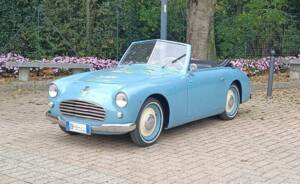
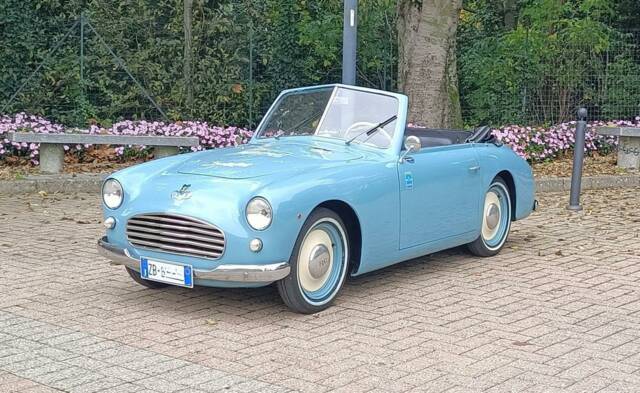
SIATA Amica listing references from Classic Trader
Below you will find listings related to your search that are no longer available on Classic Trader. Use this information to gain insight into availability, value trends, and current pricing for a "SIATA Amica" to make a more informed purchasing decision.
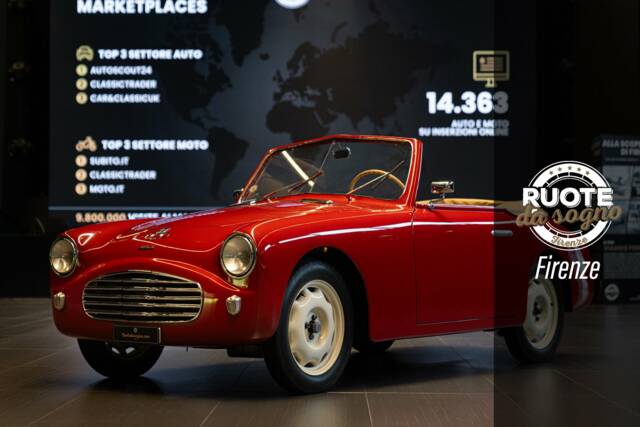
1950 | SIATA Amica
<p>PRESENTE PAD. 26 - FIERA BOLOGNA - 24-27 OTTOBRE</p>
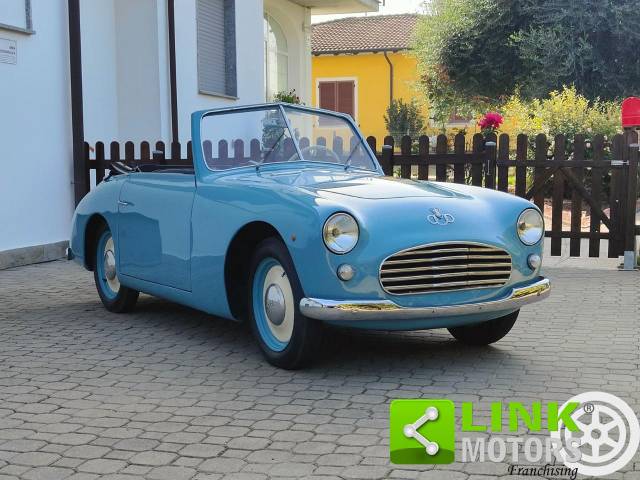
1949 | SIATA Amica
OLDTIMER Siata Amica 49
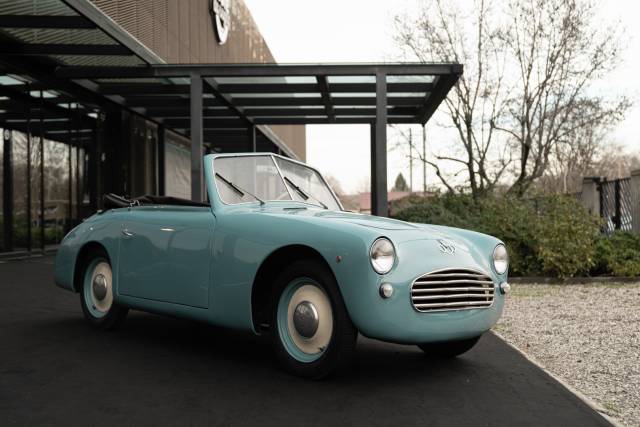
1949 | SIATA Amica
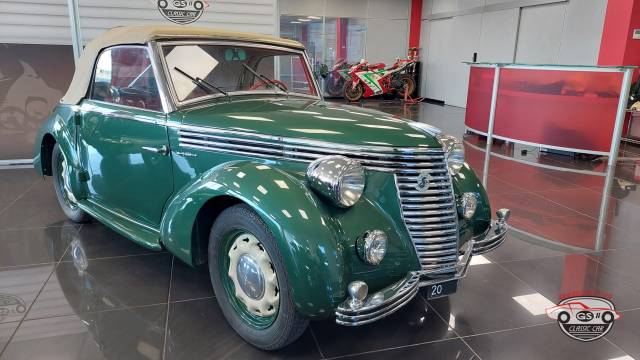
1939 | SIATA Amica
Pre-series model
Introduction and history of the SIATA Amica
The SIATA Amica was produced by S.I.A.T.A. (Società Italiana Auto Trasformazioni Accessori), a company founded in 1926 by Giorgio Ambrosini in Turin. Originally specialising in the transformation and enhancement of Fiat vehicles, SIATA made a name for itself through technical ingenuity. After World War II, SIATA re-established itself as a manufacturer of sports cars under its own brand, with production lasting until 1970. The Amica emerged in this context as a refined two-seater cabriolet and quickly gained attention for its innovative chassis, sophisticated engineering, and upscale finish. The distinctive SIATA badge—a blue shield crowned by a yellow "S" and crossed by the silhouette of a car—became a hallmark of these exclusive vehicles.
Model history
Two SIATA Amica versions reached the market: the Amica 49 (1948–1949) and the Amica 50 (1950–1952). The Amica 49 was built in a very limited run of around 50 units, all featuring a perimeter tubular steel chassis—remarked as particularly stiff and advanced for the era—starting from chassis number 101. The Amica 50 switched to a closed-section steel frame for cost efficiency, with about 300 examples crafted by Bertone. Both models were open-top, two-seat cabriolets, equipped with Fiat 500-derived running gear upgraded with SIATA's own cylinder head (Type "B") and bespoke intake manifolds. Features included column-mounted gear lever and high-quality interior appointments, reflecting post-war optimism and Italian craftsmanship.
Highlights of the SIATA Amica
Among the SIATA Amica's unique attributes is its status as one of the earliest small-series luxury cabriolets of the post-war period, created under the pen of master designer Count Mario Revelli de Beaumont. The original Amica 49's innovative and rigid tubular chassis was ahead of its class. Both the Amica 49 and Amica 50 incorporated independently suspended front wheels, hydraulic brakes, and a four-speed gearbox. All Amicas feature the column gearshift and a range of high-end period accessories—testament to SIATA's dedication to technical and aesthetic excellence. SIATA vehicles are relatively rare, and in the case of the Amica, account for 100% of current SIATA offerings and see interest at a similar level, highlighting the model's importance within the brand's history.
Technical data
Special Editions and Collectible Models
The SIATA Amica stands out due to its extremely low production figures—about 50 units of the Amica 49 and 300 of the Amica 50, with the latter seeing Bertone supervision in its construction. Selected examples were participants in historic races such as the Mille Miglia (1949–1953) and the Catania-Etna, which further increases their distinction and collectability.
Weak Spots and Common Issues
No specific weak spots are known from the available data. However, buyers should carefully inspect the chassis on the Amica 49 for corrosion or past repairs, given its rare tubular frame construction. Mechanical parts are largely Fiat-based and serviceable, but authentic SIATA cylinder heads and intake parts can be very difficult to source. Both versions require attention to vintage wiring and hydraulics due to age. An expert evaluation is advisable for any potential acquisition.
Engine and Performance, Transmission and Handling
Both Amica variants deliver a lively driving feel with their 633cc engine producing 22 hp, enabling a top speed near 100 km/h. The lightweight chassis—tubular on the 49, box-frame on the 50—paired with independent front suspension and hydraulic brakes, provides an impressively stable and confident road presence for a vehicle of its size and age. Column-mounted gear selection and the four-speed transmission further enhance the period-correct driving charm. - SIATA Amica 49: Notable for its innovative tubular chassis and extreme rarity, offering purists an original engineering concept from the late 1940s.
- SIATA Amica 50: Slightly more attainable, but still rare, with Bertone-crafted bodywork and improved production efficiency, yet maintaining all the hallmark driving qualities of the model series.
Interior, Comfort, Exterior and Design
The Amica was shaped by renowned designer Count Mario Revelli de Beaumont, whose approach achieved an elegant, open-top two-seater silhouette. Special features include a cabin furnished with high-grade materials, thoughtful period accessories, and exceptional attention to detail—rare in such compact cabriolets of the late 1940s and early 1950s. Both Amica models came equipped with standard hydraulic brakes, a column shifter, and a dashboard featuring classic instrumentation. Custom colours and trim combinations were often taken up by initial buyers, reflecting post-war Italian style. Bertone's involvement in the Amica 50 lent further refinement and precision to body construction. Optional extras were available from SIATA's own accessory catalogue, underlining the model's bespoke character.
Other relevant features
The SIATA Amica's racing heritage, with official Mille Miglia eligibility, adds significant historic value for motorsport enthusiasts. The presence of the distinctive SIATA badge, emblematic of Italian automotive design, underscores each vehicle's origins in the country's post-war renaissance of small-series sports cars.
Summary
The SIATA Amica is a standout in the history of Italian post-war sports cars, combining advanced engineering, stylish cabriolet bodywork by distinguished designers, and a unique production history. Built in very small numbers—about 50 Amica 49 and 300 Amica 50—the model offers a rare glimpse into the world of specialist Italian carmakers. Authentic Fiat mechanicals upgraded with exclusive SIATA components, high build quality, and participation in events like the Mille Miglia mark the Amica as one of the era's most sophisticated and sought-after compact convertibles.