Goliath Express classic cars for sale
The Goliath Express stands as a symbol of German small utility vehicle engineering, reflecting the innovative approach of Bremen-based Goliath-Werke. Particularly recognised for their compact designs and three-wheeled commercial vehicles, the Express captures an era when practicality and reliability guided the needs of craftsmen and small business owners.
Résultats de la recherche
À l'heure actuelle, il n'y a pas d'annonces correspondant à votre recherche.
Create search alert
Let yourself be notified as soon as a listing is published that matches your search filters.
Create listing
Do you have a Goliath Express that you want to sell? Then create a listing now.
Create listingGoliath Express listing references from Classic Trader
Below you will find listings related to your search that are no longer available on Classic Trader. Use this information to gain insight into availability, value trends, and current pricing for a "Goliath Express" to make a more informed purchasing decision.
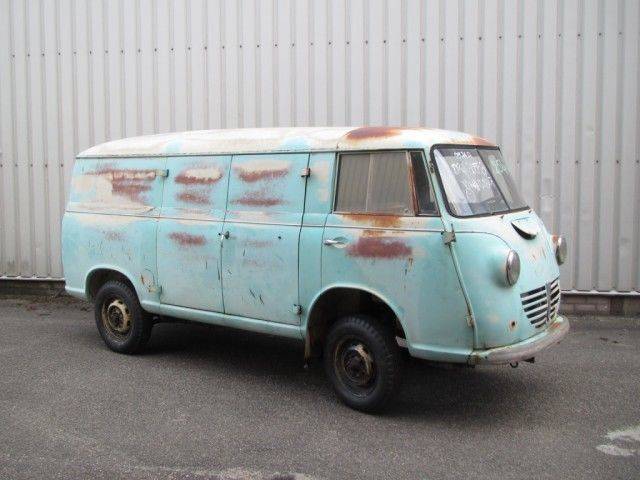
1959 | Goliath Express 1100
Andere Goliath express 1100
Create search alert
Let yourself be notified as soon as a listing is published that matches your search filters.
Create listing
Do you have a Goliath Express that you want to sell? Then create a listing now.
Create listingHistory of the Goliath Express
Goliath-Werke Borgward & Co., founded by Carl F. W. Borgward and Wilhelm Tecklenborg in Bremen in 1928, dedicated itself to manufacturing three-wheeled and small utility vehicles. The Goliath Express was introduced as a practical answer to the demand for economical and agile transport, carving out a vital role among tradespeople in post-war Germany. Goliath's vehicles, though less known internationally compared to other brands in the Borgward Group, showcased German ingenuity, especially in compact mobility solutions.
Model History
The Goliath Express played a unique part in the manufacturer's lineup, following Goliath's earlier focus on three-wheelers and motorised carts. Its utilitarian platform foreshadowed subsequent developments in small commercial transport, establishing a legacy that influenced later Borgward group vehicles. The Express had no direct predecessor in the Goliath range and stood apart, serving as a precursor to post-war van and light truck concepts.
Highlights and Market Presence
A particular highlight of the Goliath Express is its status as Goliath’s principal entry in the classic vehicle market. With its mechanical simplicity, ease of use in tight urban spaces, and clear utility orientation, it continues to intrigue collectors with a penchant for technical originality. The Express exemplifies the post-war reconstruction spirit, combining durability with economical operation.
Technical Data
Special Editions and Collectible Models
No significant special editions of the Goliath Express are known; the series focused primarily on practicality, consistent with the company's mission to deliver accessible, reliable transport for businesses. Nevertheless, surviving examples can be considered rare due to their original workhorse status, with most vehicles having been used extensively and few preserved in good condition.
Weak Spots and Common Issues
Due to their age and frequent heavy-duty usage in commercial settings, most Goliath Express vehicles for sale today exhibit typical signs of wear such as aged components, possible rust issues, and missing accessories. Given that most available examples are restoration projects or suitable only as parts donors, hidden damage and incomplete documentation are to be expected. There is no guarantee for roadworthiness or mechanical integrity, so thorough inspection and planning for full restoration are necessary.
Engine and Performance, Transmission and Handling
The Goliath Express prioritised functional engineering, featuring modestly powered engines and basic transmissions. Its compact size and low curb weight offered agile handling in dense city environments and narrow rural roads, making it a favourite among post-war delivery services. The model was never designed for high speeds but for reliability and efficient load carrying over short to medium distances. Among Goliath’s output, the Express remains the most recognised for its essential contribution to daily life in mid-20th-century Germany. The technical simplicity—small-displacement petrol engines, rear-wheel drive, basic suspension—makes it both a curiosity and a learning platform for those interested in classic commercial vehicle engineering.
Interior, Comfort, Exterior and Design
The Express radiates a purpose-driven simplicity both inside and out. Interiors offered just the essentials—minimal seating, basic instruments, and robust materials selected for longevity in professional use. The exterior design pared back decoration in favour of functionality, with a compact load bay and weather-resistant finishes. Any original accessories such as toolboxes, side panels, or period-specific liveries add considerable authenticity.
While there were rarely luxury appointments or advanced features, owners occasionally improvised storage solutions or auxiliary equipment. Unique colour schemes or surviving branding from its time in service give restored examples their character.
Other Noteworthy Features
As a legacy of Goliath’s experimental approach, the Express sometimes incorporated unconventional solutions—such as three-wheel or early four-wheel drive variants—reflecting the adaption to market needs through simple but effective mechanical innovation. The vehicle’s survivability in daily business testifies to robust German small-series production values of the era.
Summary
Goliath Express classic vehicles are emblematic of Germany’s practical transport ethos during the mid-20th century. They offer both enthusiasts and restorers the chance to engage with authentic small commercial vehicle history. Most offered on the market today require extensive restoration, reflecting their hard-working legacy. This scarcity, paired with straightforward mechanical systems, makes the Goliath Express a distinctive presence for collectors keen on understanding the roots of European light transport engineering.