- Car
- Brabus (0 offers)
Buy Brabus Classic Cars
Brabus has turned Mercedes-Benz engineering into something altogether more singular since 1977, from discreet W201 saloons to V12 grand tourers and record-breaking Rockets. Find documented Brabus classics with the specification, history and character that make the difference.
Search results
Currently, there are no matching listings for your search.
Create search alert
Let yourself be notified as soon as a listing is published that matches your search filters.
Brabus listing references from Classic Trader
Below you will find listings related to your search that are no longer available on Classic Trader. Use this information to gain insight into availability, value trends, and current pricing for a "Brabus" to make a more informed purchasing decision.
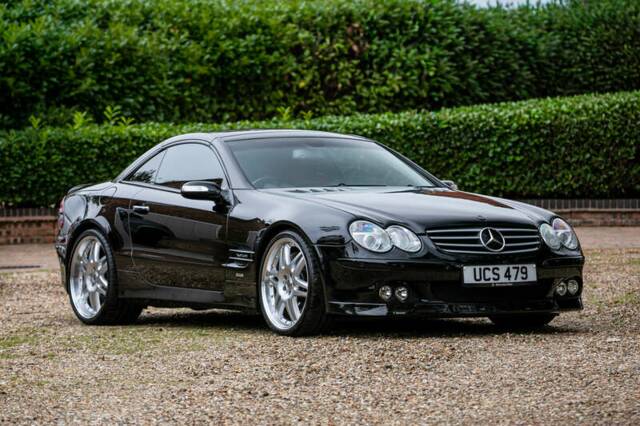
2004 | Brabus SV 12
2004 Mercedes-Benz Brabus SV12 BiTurbo Roadster

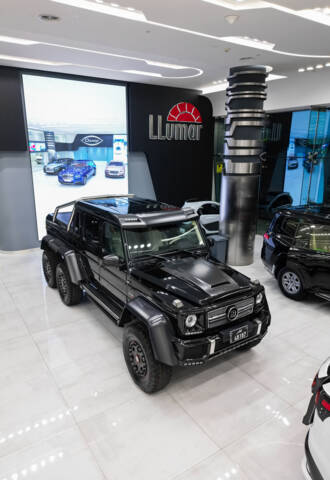
2014 | Brabus G 700 6x6
6X6
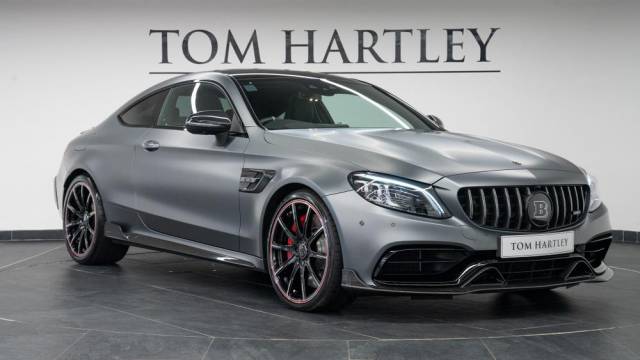
2021 | Brabus 650
Mercedes-Benz C63 Brabus C650
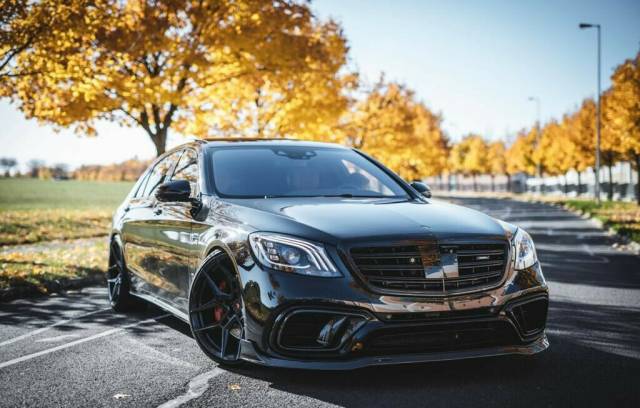
2018 | Brabus 800
BRABUS B800 im Neuzustand

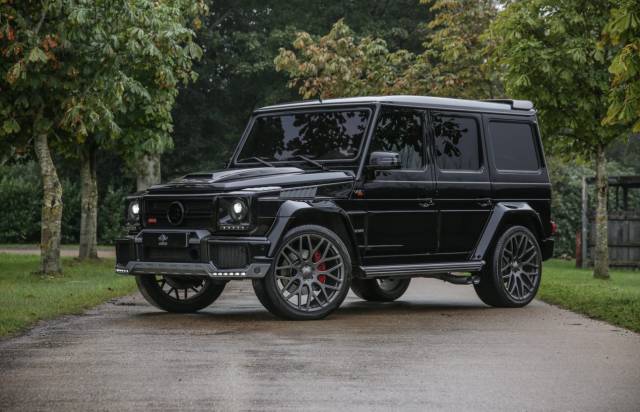
2013 | Brabus G 800 Widestar
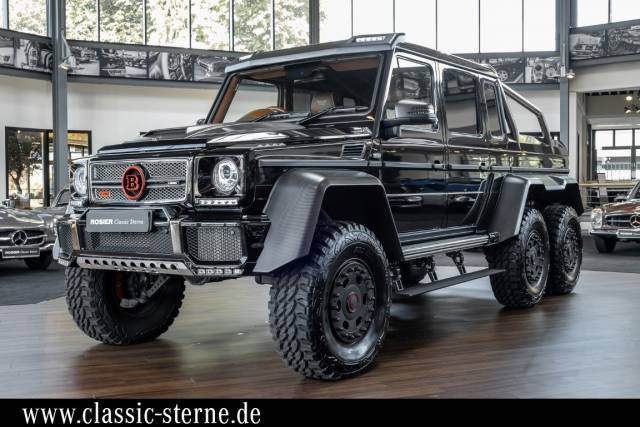
2015 | Brabus G 700 6x6
G 63 AMG 6x6 Brabus700 Limited 1 of 15 NewCar
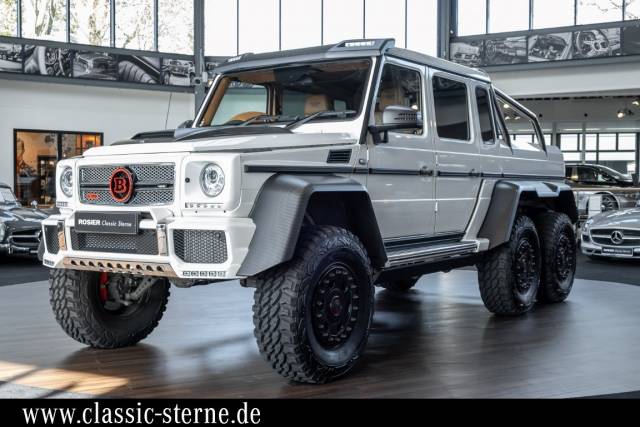
2015 | Brabus G 700 6x6
G 63 AMG 6x6 Brabus700 Limited 1 of 15 NewCar
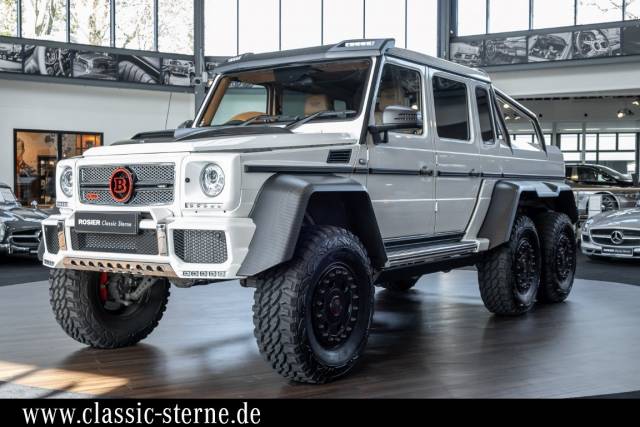
2015 | Brabus G 700 6x6
G63 AMG 6x6 Brabus700 Limited 1 of 15 NewCar
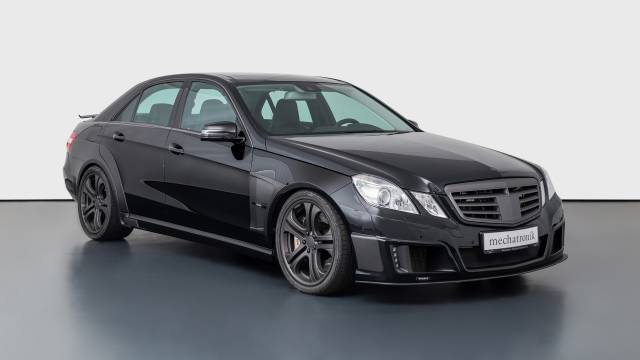
2009 | Brabus E V12 800
Bis zu 370 km/h Höchstgeschwindigkeit
Create search alert
Let yourself be notified as soon as a listing is published that matches your search filters.
Brabus history and heritage
Brabus is not a car maker in the conventional, volume-production sense; it is a German manufacturer, converter and individualisation specialist whose best cars have an identity of their own. Founded in Bottrop in 1977 by Bodo Buschmann and Klaus Brackmann, the company took its name from the first three letters of each surname. Brackmann soon departed, while Buschmann developed the business from a Mercedes-Benz specialist into an internationally recognised performance name. That origin remains central to a collector car: a genuine period Brabus is not defined by a boot badge or a set of wheels, but by a traceable transformation of a Mercedes-Benz, smart, Maybach or, in selected cases, another base vehicle.
The early formula was delightfully uncompromising. Brabus saw the compact Mercedes 190 as an opportunity rather than a limit. In 1983 it installed the 4,973cc M117 V8 from the S-Class into a W201, adapting the front structure, brakes and suspension around it. With 250 PS claimed, the 190 E V8 made the small saloon dramatically faster without losing its practical shape. The same decade also established Brabus’s interest in efficient high-speed aerodynamics: its 1985 W124 230 E achieved a Guinness-recognised drag coefficient of 0.26.
By the end of the 1980s, the company had created one of the most appealing analogue Brabus cars. The 190 E 3.6S enlarged the M103 straight-six to 3.6 litres, paired it with revised suspension and brakes, and usually wore characteristic Monoblock wheels. It was not simply a luxury version of the Mercedes: Kevlar bucket seats and a relatively light 1,342kg kerb weight made it an unusually focused four-door. Its significance lies in the combination of a compact, mechanical Mercedes platform with a properly engineered engine conversion.
The 1990s took the familiar ‘wolf in sheep’s clothing’ idea to an extraordinary conclusion. In 1993 Brabus fitted a 6.9-litre V12 into a W124 E 500. The first E V12 developed 509hp and 710Nm, with a claimed 0–62mph time of 4.6 seconds and 178mph maximum. Its W210 successor used a 7.3-litre V12 with 582hp and 772Nm; its 205mph limiter reflected contemporary tyre approval rather than a shortage of ambition. The equally remarkable T V12 estate showed that a seven-seat load carrier could be developed for 199mph-plus running. These are defining Brabus cars because the engineering reaches far beyond engine output: transmission, cooling, braking, suspension and high-speed stability had to be resolved together.
The new millennium brought forced induction, more electronics and even larger numbers. The W211-based E V12 used a 6.3-litre twin-turbo V12 rated at 640hp and 1,026Nm. Brabus recorded more than 217mph at Nardò in 2005. The C219 CLS-based Rocket followed, producing 730hp and 1,100Nm electronically limited torque; its 2006 Nardò runs reached 225.2mph and later 227.2mph. Alongside these headline cars, Brabus developed smart models, roadsters, SUVs, saloons, estates and vans. This breadth matters on a make page: a compact smart Brabus, a 190 E 3.6S and an SV12 Roadster appeal to quite different owners, even though all reflect the same insistence on specification and individual character.
What distinguishes a Brabus classic
The most collectable older Brabus vehicles are persuasive because their upgrades form a coherent package. On an early normally aspirated conversion that may mean increased capacity, altered crankshaft and pistons, cylinder-head work, camshafts, intake and exhaust systems, revised cooling and carefully matched transmission ratios. On a twin-turbo V12, the work extends to charge cooling, fuelling, engine management, exhaust flow and torque control. A car with a complete Brabus conversion is therefore fundamentally different from an otherwise standard Mercedes fitted later with cosmetic accessories.
Understatement is another part of the attraction. Many 1980s and 1990s cars retain the restraint of their Mercedes-Benz base: a deep but integrated front spoiler, discreet skirts, a small rear spoiler, a Brabus speedometer and wheels which fill the arches without overwhelming the body. Monoblocks became visual shorthand for the marque, but are not proof on their own. Later Rocket, Widestar and V12 projects use carbonfibre, larger intakes and much broader bodywork because their performance and tyre requirements demanded a more overt treatment. Both approaches are authentic when the individual car’s paperwork supports them.
Four strands give a useful overview of the marque. A 190 E 3.6S is for the buyer who values low mass, a straight-six and analogue feedback. A W124 conversion brings the solidity and long-distance manners for which that Mercedes generation is valued. E V12 and T V12 cars turn a saloon or estate into an astonishingly fast continent-crosser. An R230 SV12 BiTurbo Roadster or original Rocket belongs to the later era of immense turbocharged torque, electronic chassis systems and complex luxury equipment. They should not be judged by one price guide, one running-cost assumption or one idea of what a Brabus ought to be.
The vital distinction is documented scope. Some period cars left Bottrop with engine, drivetrain, bodywork, wheels, suspension and interior changes. Others had an approved wheel-and-aero package or a power upgrade. Both can be desirable, but their market position is not equivalent. Look for a Brabus invoice or order record, certificate, specification sheet, period photographs, service history and, where possible, confirmation from Brabus. The vehicle identification number must match the documents. A dealer invoice for a set of wheels does not establish that an engine conversion is factory-authorised.
Technical data for notable Brabus cars
Specifications varied with base car, country, customer choices and development stage. The figures below are useful reference points rather than a substitute for examining the exact car. Brabus did not publish reliable production totals for many historical conversions; auction claims of rarity should be treated as claims unless supported by the company or a credible period source.
Those outputs explain why condition is more important than an alluring headline number. High cylinder pressures, substantial heat rejection and four-figure torque impose a real burden on cooling systems, wiring, transmission components, differential mounts, brakes and tyres. On earlier conversions, inspect for good cold oil pressure, stable temperature, clean fuelling and evidence of quality machine work. On the twin-turbo cars, diagnostic checks, boost behaviour, intercooler plumbing, fuel delivery and the correct Brabus ECU calibration deserve specialist attention. A period dynamometer graph is interesting provenance, not a mechanical health certificate.
Market overview and buying tips
The Brabus market is small, international and sharply divided by authenticity. A correctly documented, fully converted V12 may be a serious collector proposition, whereas a standard Mercedes with Brabus-style trim should be valued principally as its underlying Mercedes. Condition, specification, service evidence and the ability to keep the car usable matter at least as much as mileage. A low-mileage car that has sat unattended can be riskier than one exercised regularly and maintained by a knowledgeable specialist.
A particularly useful UK market reference is the 2004 Mercedes-Benz Brabus SV12 BiTurbo Roadster sold by Iconic Auctioneers at the NEC Classic Motor Show on 8 November 2025 for £66,375. The Obsidian Black, Exclusive Red-leather R230 was described as one of fewer than 20 SV12 Roadsters and one of three known in the UK. It had covered 30,459 miles, had maintenance records from 2004, an August 2025 service including plugs, tyres and wheel refurbishment, and an MOT to August 2026 without advisories. That result is a genuine transaction, not a general valuation: it illustrates what a low-mileage, well-presented, UK-known car with a substantial file can achieve, rather than setting a price for every R230 or every Brabus badge.
For UK buyers, right-hand drive provenance is a meaningful practical consideration. Many desirable older Brabus cars were supplied in left-hand drive for continental Europe, which can be entirely acceptable for a collector, but it affects overtaking visibility, toll booths, resale audience and sometimes insurance appetite. Do not assume a car advertised in Britain is UK supplied or right-hand drive. Check the VIN, the original delivery market, speedometer units, lighting pattern, service history and import documentation. A well-documented LHD E V12 can be the right purchase; an unexplained conversion or a UK registration without a clear import trail is not.
Registration also needs careful thought. The V5C should describe the car accurately, particularly where an engine capacity or engine number change has been notified. Keep invoices, engineer reports, correspondence and any evidence supplied for DVLA records with the car. Significant changes may need to be reported to DVLA, and an insurer should know about every declared performance, suspension, wheel, brake and body modification. Agreed-value cover from a specialist is often more sensible than hoping that ordinary market-value cover understands a rare conversion. If an imported car has had historic-registration, NOVA, IVA or age-related-registration issues in its past, obtain the relevant paperwork before committing.
An MOT is a useful snapshot, not authentication. Review the online MOT history for recurring corrosion, tyre, brake, suspension, warning-light and emissions observations; then ask why an advisory was rectified and retain invoices. The tester will assess roadworthiness, but does not certify that a turbo installation, wheel width, engine map or body kit is original Brabus specification. On modified cars, tyre speed and load ratings, wheel clearance, secure bodywork, braking balance and visible leaks are particularly relevant. A freshly issued certificate cannot make old fuel, perished hydraulic hoses or a deteriorating wiring loom harmless.
The inspection should start with the Mercedes platform. W201, W124 and W210 cars merit a close look at jacking points, front and rear subframe mounts, sills, wheelarches, door bottoms, boot floor and suspension pick-up points. A W210 needs especially rigorous corrosion scrutiny. On an R230, test the Vario roof through a full cycle and examine hydraulic rams, drains, boot seals, batteries, fuse systems and the Active Body Control suspension. ABC faults can be caused by tired accumulators, leaking pipework, pumps or valve blocks; a warning-free dashboard at the start of a viewing is not enough. A long road test and an underbody inspection remain essential.
For every V12, check cold starting, idle quality, smoke, coolant smell, oil leaks, transmission engagement, propshaft and differential noise, engine mounts and brake condition. A capable Mercedes specialist is valuable, but a pre-purchase inspection by someone who understands the specific Brabus engine package is better. Ask whether parts are standard Mercedes, modified Brabus items or bespoke components, then price the realistic availability of each. Routine Mercedes service items are often obtainable in the UK and Europe; engine internals, carbonfibre, period interior trim, exhaust components, electronics and correct old Monoblocks can take time and money to source. Have that workshop and parts plan before buying, not after a failure.
The driving character
A classic Brabus does not offer one uniform experience. The 190 E 3.6S is compact and physical, with the driver close to the controls and a straight-six that rewards deliberate use of the rev range. It retains the upright visibility and sensible dimensions of a W201, but the pace and chassis response tell a different story. It is an engaging road car rather than a modern track weapon, and a correctly set-up example feels all the better for being used thoughtfully rather than preserved as a static exhibit.
The W124 and W210 conversions are defined by contrast. They can travel quietly and carry people or luggage like a conventional Mercedes, then deploy enormous torque with very little fuss. That duality is the appeal. It also demands restraint: period steering, brakes, tyre technology and stability systems should be respected rather than judged against a new super saloon. At British road speeds, the effortless mid-range and long-legged refinement are more relevant than the top-speed claim.
An SV12 Roadster, E V12 III or Rocket feels from another technological era. The torque arrives with an almost unreal density, while the five-speed automatic, limited-slip differential, turbochargers, active suspension and cooling systems work in the background. A good one can be remarkably civilised on a long journey; a neglected one can be expensive before it has left the seller’s postcode. Warm the oil properly, use correct high-speed-rated tyres with conservative age limits, and avoid full load after prolonged storage. Regular sympathetic exercise with recorded maintenance usually adds more confidence than an implausibly low odometer reading.
Design, cabin and brand identity
Brabus generally worked with the architecture of the donor car instead of concealing it. Early vehicles use clean German surfaces, functional air management and wheels with enough visual authority to change the stance without destroying the Mercedes silhouette. Monoblock wheels are especially important to the period look: their correct design, size, offsets, centre caps and casting markings can help establish whether a car has been faithfully maintained. They should also be crack-tested before use; a cosmetically fresh wheel is not necessarily a sound one.
Inside, Brabus could specify leather, Alcantara, wood, carbonfibre, steering wheels, instruments, pedals, seats and details tailored to a first owner. The best cabins feel purposeful rather than generically customised. Wear to original leather, plaques and switchgear is often preferable to a recent retrim which cannot be substantiated. Compare materials and stitch patterns with period photographs and invoices. The same caution applies to body kits: poor panel fit, unconvincing carbon weave, missing fixing hardware and ill-matched paint are warnings, not harmless cosmetic imperfections.
The brand’s evolution is visible across these cars. A 1980s Brabus may pass unnoticed by everyone except a Mercedes enthusiast; a Rocket makes no attempt to hide its ability. Neither is intrinsically more important. The collecting case rests on the quality, completeness and historical logic of the individual specification.
Summary: choosing a documented Brabus
Brabus classics span compact straight-six saloons, formidable V12 Mercedes-Benz conversions, roadsters, estates and record-speed four-doors. Their shared appeal is not a logo but the meeting of serious engineering, individual specification and usable grand-touring character. Find Brabus cars on Classic Trader, establish exactly what was converted, check the UK registration and MOT history where relevant, and commission a marque-aware inspection before buying. The right car will have a convincing story as well as extraordinary performance.